
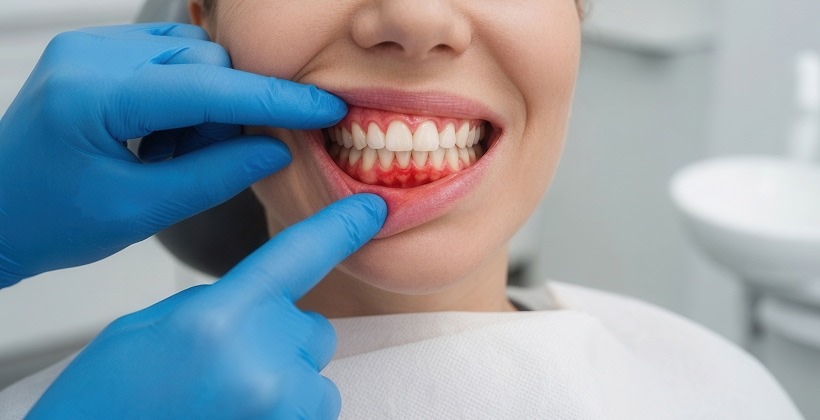
Swollen gums usually develop when the gum tissue becomes irritated or inflamed. The affected area may look red or puffy, feel tender and bleed when you brush or floss. While minor swelling can occur because of trapped food or brushing too firmly, persistent symptoms may indicate gingivitis, gum disease, an infection or a problem with an erupting wisdom tooth.
The right treatment for swollen gums depends on what is causing the inflammation. A dental check-up allows your dentist to examine your gums, identify any plaque or infection and recommend suitable treatment before the problem becomes more serious.
This blog explains the common causes of swollen gums, the symptoms to look out for, and when it is time to see your dentist.
What Do Swollen Gums Look and Feel Like?
Healthy gums are generally firm and fit closely around the teeth. When a gum is inflamed, it may become red, enlarged or tender. In some cases, the gums may appear darker than usual or begin to cover more of the tooth surface.
Common signs of gum inflammation include:
- Redness or a slightly purplish tinge
- Puffy, tender or sore gums, often with gum swelling and pain when you eat
- Bleeding from gum tissue when you brush or floss
- Gums that look shiny or feel soft
- A swollen gum at the back of the mouth, often around a wisdom tooth
Gingivitis does not always cause pain, so bleeding or redness may be the first changes you notice. More advanced gum disease may cause receding gums, loose teeth or changes in the spaces between your teeth.
What Causes Swollen Gums?
Swollen gums occur when the gum tissue becomes irritated or inflamed by bacteria. The inflammation may affect the whole mouth or remain confined to one area.
1. Gingivitis and Plaque Build-Up
Gingivitis is behind most cases of swollen gums. Every time you eat, a sticky film called plaque forms on your teeth. It is full of bacteria, and if it is not removed by regular brushing and flossing, it hardens into tartar that a toothbrush cannot shift. These bacteria irritate the gum tissue, which is one of the main causes of bleeding and swelling.
Among the usual gingivitis causes are missed brushing, a sugary diet and skipped dental visits. Left unchecked, gingivitis can progress to periodontitis, a serious condition that can damage the bone supporting your teeth.
2. Poor Oral Hygiene
We have all rushed a night-time brush after a long day. But consistently skipping brushing or flossing lets plaque build up quickly. Within a few days, that build-up can irritate your gums enough to cause visible swelling and tenderness.
3. Hormonal Changes and Pregnancy
Gingivitis and pregnancy often go hand in hand. Shifting hormone levels increase blood flow to the gum tissue, making it more sensitive and prone to inflammation. These same changes make it harder for your body to fight bacteria, so “pregnancy gingivitis” is common. With a good oral care routine and regular check-ups, most expecting mothers can keep their gums healthy throughout pregnancy.
4. Diet and Vitamin Deficiency
Your gums need nutrients to stay healthy, particularly vitamins C and B. When your diet falls short, gum tissue struggles to repair itself and can become swollen and prone to bleeding. Our guide to the best diet for oral health explains which foods help protect your gums and teeth.
5. Infection or a Dental Abscess
An untreated cavity can develop into a dental abscess, a pocket of pus that causes localised, often painful swelling. This can show up as a swollen gum at the back of the mouth or around a single tooth. In many cases, a root canal treatment can save the tooth and clear the infection. Learn more about it in our blog on whether you need a root canal to save an infected tooth.
6. Medications and Health Conditions
Some medications trigger swollen gums as a side effect, including certain blood pressure tablets, anti-seizure drugs and immunosuppressants. Health conditions such as diabetes also raise the risk of gum problems because they affect blood sugar and your immune response. If you have recently started a new medication and noticed changes, there may be a connection worth mentioning to your dentist.
7. Smoking, Braces and Dentures
Tobacco irritates gum tissue and slows healing, so smokers tend to have more gum disease and more severe symptoms. New braces or dentures can also rub against the gums and cause temporary swelling, which usually settles as your mouth adjusts. If it does not, the appliance may simply need adjusting.
Is Gingivitis Contagious?
Patients often ask about gingivitis and whether it is contagious. The gum disease itself is not contagious, but the bacteria that cause it can be passed between people through saliva, for example by sharing cutlery, drinks, etc. Being exposed to those bacteria does not guarantee you will develop gingivitis. Still taking precautions is important.
How to Ease Swollen Gums at Home
Home care will not fix the underlying cause, but it can ease discomfort while you arrange to see a dentist:
- Keep brushing, gently, with a soft-bristled toothbrush and small circular motions
- Rinse with warm salt water for 30 seconds, two to three times a day, to soothe inflammation
- Drink plenty of water to boost saliva, which naturally cleans the mouth
- Use a warm compress to ease pain and a cold compress to bring down swelling
- Avoid alcohol-based mouthwashes, smoking and spicy or acidic foods that can irritate sensitive gums
When Should You See a Dentist?
Some situations need more than home remedies. Book an appointment if you notice:
- Swelling that lasts longer than two weeks
- Severe or worsening gum swelling and pain
- Bleeding from gum tissue that is heavy or will not stop
- Teeth that feel loose or a bite that feels different
- Pus, a bad taste or persistent bad breath
- Facial swelling or a fever, which need urgent care; see our guide on what to do in a dental emergency or contact our emergency dentistry team straight away.
Support Your Gum Health with Early Treatment
Swollen gums are often your mouth’s way of signalling that something needs attention. The cause may be as simple as trapped food or brushing irritation, but ongoing redness, bleeding or pain can point to gingivitis, periodontitis, an abscess or a wisdom tooth problem.
Phoenix Road Dental provides judgement-free dental care in Spearwood, including gum examinations, professional cleaning and treatment for dental infections and wisdom tooth concerns.
Contact our team to arrange an assessment and take the next step towards healthier, more comfortable gums.